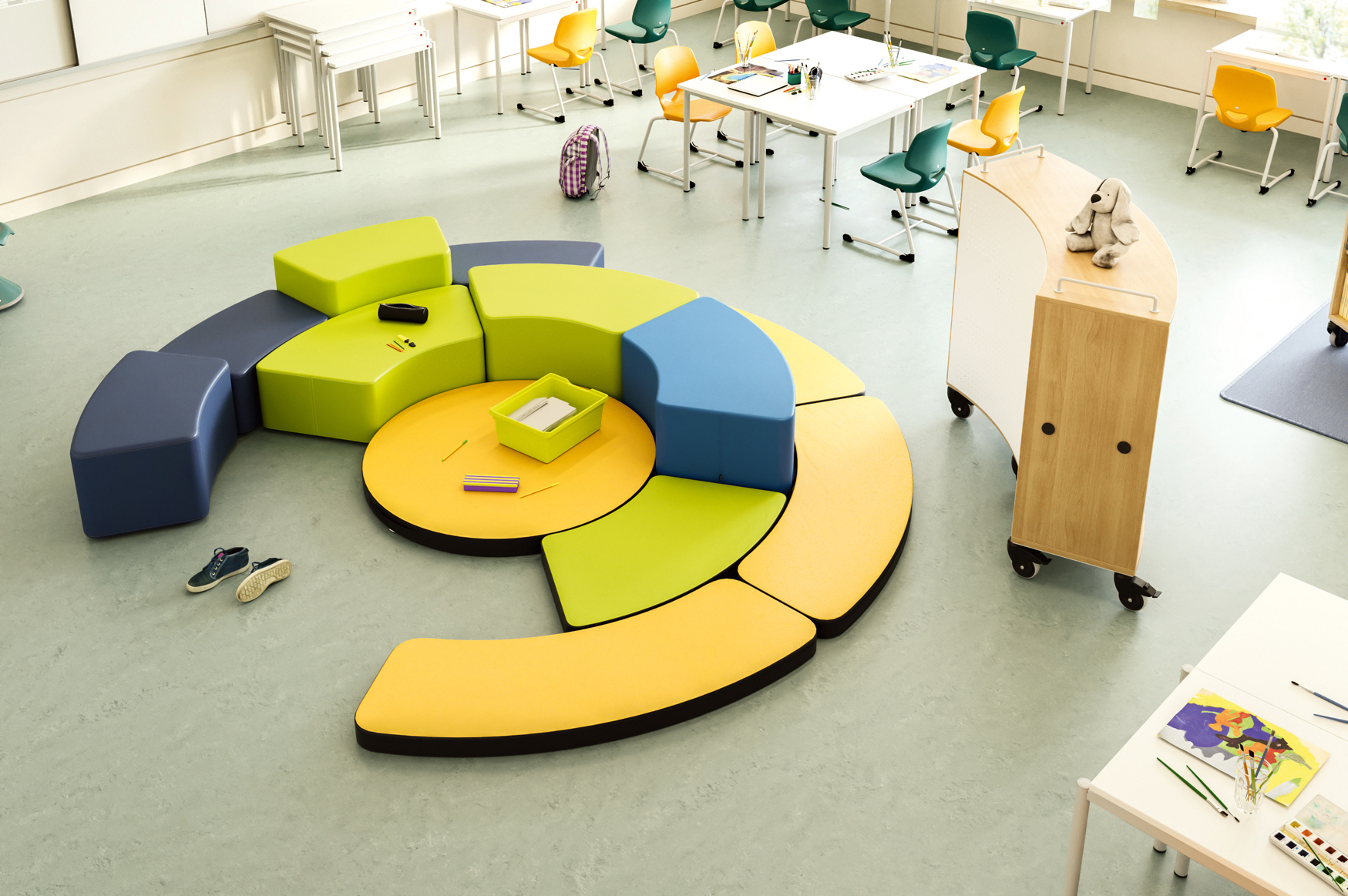
For many years, classrooms have followed a fairly familiar layout: desks and chairs facing the teacher, a board at the front, and a space where each student usually occupies the same place.
However, teaching and learning methods have evolved. Collaborative work, interdisciplinary projects, research and independent learning are now part of everyday life in many schools. Given these changes, it is worth asking: does it still make sense for learning spaces to be designed around just one teaching model?
The Space Itself Plays an Educational Role
Classroom layout is not simply an aesthetic or practical decision. It influences how students interact, work and communicate, as well as the opportunities they have to take an active role in their learning.
A space designed exclusively for listening and looking towards the front may not be suitable for activities that involve collaboration, experimentation, discussion or independent work.
That is why there is a growing need to design classrooms that can adapt to different activities and ways of learning.
Flexibility Does Not Mean a Lack of Structure
A flexible classroom does not necessarily need to be filled with movable furniture or constantly changing layouts. It is about having solutions that allow different configurations without making the school’s daily routines more complicated.
Desks that support both individual and group work, easy-to-move chairs, reading areas, spaces for interaction and areas dedicated to specific activities can all coexist within the same classroom.
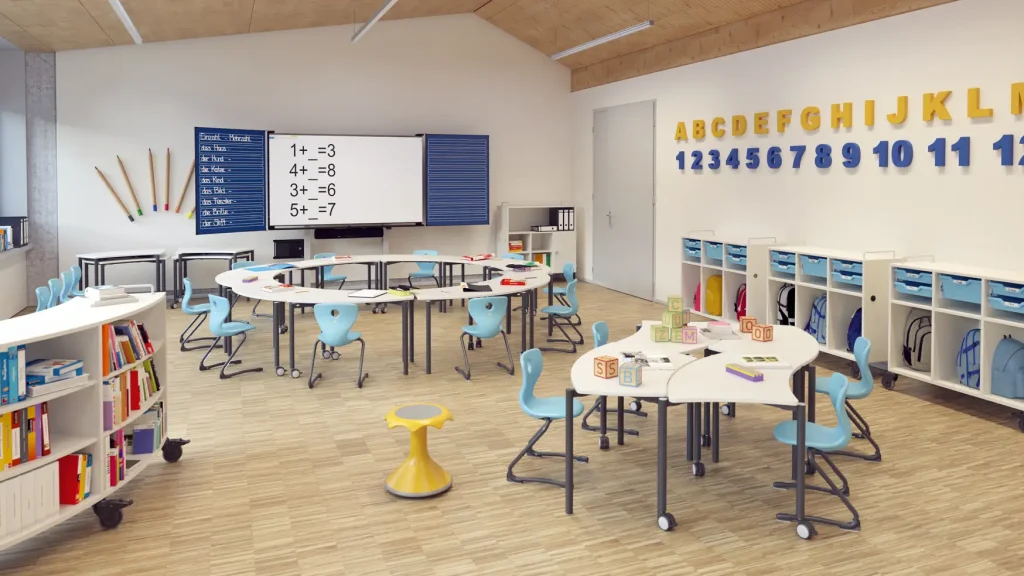
It is also important for furniture to make the best possible use of the available space while being durable, comfortable and appropriate for the age and needs of the students.
Designing Around Real Needs
Before renovating a classroom, it is worth asking a few questions: What activities take place there? How is the space used throughout the day? What challenges do teachers face? What opportunities do we want to offer students?
There is no universal layout that works for every school. Each educational project has its own characteristics, and the learning environment should reflect them.
Ultimately, transforming a classroom is not simply about replacing desks and chairs. It is about rethinking what we want to happen within that space and creating an environment that supports those experiences.
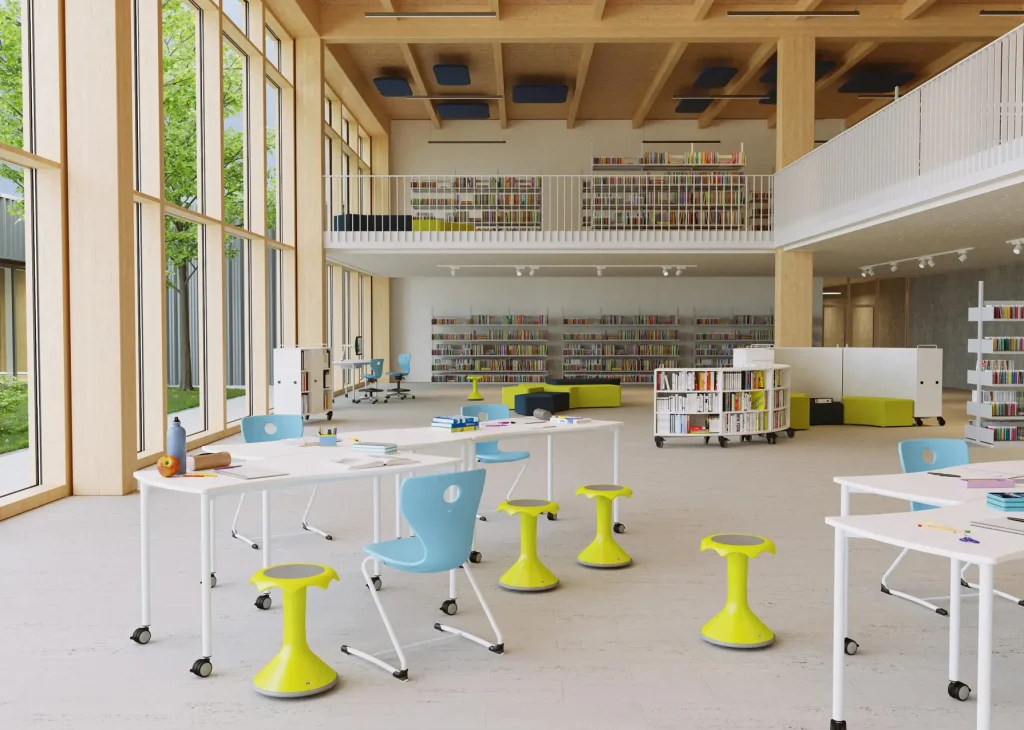
At EDIME, we see educational furniture and equipment as an integral part of this process: listening to each school’s needs, assessing its spaces and proposing solutions that support and respond to its educational vision.
Since 1952, we have been designing and manufacturing furniture and equipment for educational institutions, combining experience, in-house manufacturing and solutions tailored to each space.
Discover EDIME and our educational space solutions: